James McFadden, one of Scottish football’s most recognisable modern-era figures, has been declared bankrupt after amassing debts in excess of £2.5million.
The former Scotland international and Everton forward, now 42, is understood to have voluntarily entered sequestration after being unable to meet substantial tax liabilities. Reports indicate total debts of £2,594,192.
McFadden rose to prominence with Motherwell, winning the Scottish PFA Young Player of the Year award in 2003 before earning a move to the Premier League. He went on to represent Everton, Birmingham City and Sunderland south of the border, while also enjoying multiple spells back in the Scottish Premiership.
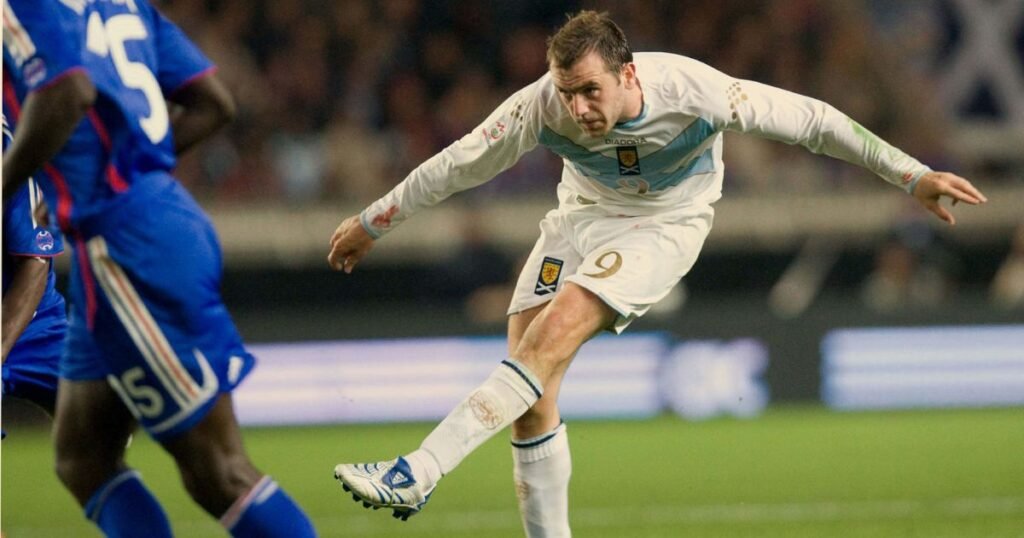
While his club career was distinguished, McFadden’s most enduring legacy remains with the national team. He earned 48 caps for Scotland and famously scored the iconic winner against France in Paris during Euro 2008 qualifying — a goal still regarded as one of the greatest in the country’s football history.
Since retiring in 2018, McFadden has remained a visible presence in the game, working as an assistant coach with Scotland and establishing himself as a respected football pundit with broadcasters including Sky Sports.
However, like a number of former professionals, McFadden has been unable to escape long-standing financial issues stemming from investments made early in his playing career. It is understood that he invested in film production partnerships and property schemes during the early 2000s, which were marketed at the time as offering tax advantages.
Those schemes were later ruled by HM Revenue and Customs to constitute tax avoidance, leaving investors exposed to significant retrospective tax bills. McFadden was previously taken to court by HMRC in 2018 over an unpaid sum, which was settled with assistance from a family member.
Opus Restructuring, the insolvency firm overseeing the process, confirmed that McFadden had entered sequestration voluntarily. In a statement, a spokesperson said: “This follows losses connected to historic property and film investment schemes in the early 2000s and associated tax matters. All appropriate legal processes are being followed.”
McFadden’s case echoes similar difficulties faced by other former players caught up in failed tax schemes, highlighting once again the financial risks footballers were encouraged to take during that era.
Despite the financial setback, McFadden remains a highly respected figure in Scottish football, remembered above all for his contribution on the pitch and one unforgettable night in Paris.

Co-Founder of Fitba Focus and MMA UK. A lifelong Rangers fan and former player, he combines over a decade of sports media experience with a deep-seated passion for the Scottish game. From the Ibrox stands to the lower-league terraces, Frankie is dedicated to providing honest, fan-led analysis of the full Scottish pyramid.