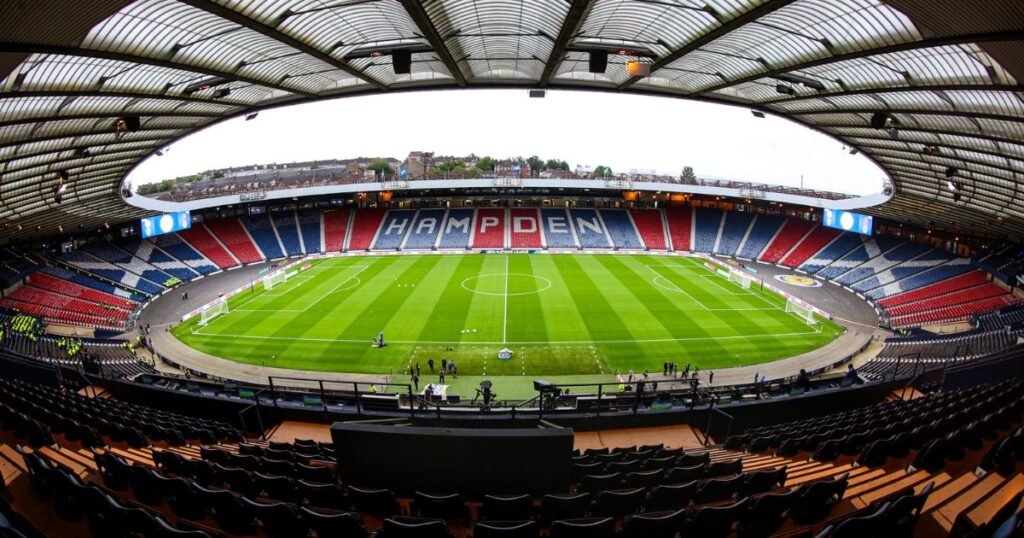
As fans, we don’t just go to games; we step into Scotland’s football cathedrals. From the salt-aired terraces of Ayrshire to the cauldrons of Glasgow, our stadiums are where historic charm meets civic pride. Whether it’s the electric atmosphere of a derby or the quiet weight of a century of history, every ground in the Scottish pyramid tells a story. At Fitba Focus, we believe the stadium is just as important as the 90 minutes on the pitch. This is our definitive guide to the architecture, the tragedy, and the triumph of Scotland’s most famous grounds. The Historic Giants: Hampden and Ibrox Hampden Park: The National Stage When you walk into Hampden Park, you’re standing on the ultimate stage of the Scottish game. With a current capacity of 51,866, it’s the home of the national team and the Scottish Cup Final. The Legend: In 1937, a staggering 149,415 people packed in for Scotland v England—a record that still boggles the mind today. The Modern Era: Today, it’s an all-seater UEFA-category arena. If you’re planning a visit, I always recommend the Scottish Football Museum onsite—it’s the best way to see how the historic sightlines were preserved during the 20th-century redevelopments. Ibrox Stadium: The Blue Room and the Roar You feel the identity of Ibrox before you even see the turnstiles. Home to Rangers with a capacity of 50,817, it is one of the most imposing club stadia in Britain. A Hard-Won History: Ibrox’s history is complex, marked by the tragedies of 1902 and 1971. These events didn’t just change the club; they changed global football safety, accelerating the move to the modern, all-seater stands we see today. The Experience: For the best atmosphere, you want to be in the Broomloan or Govan areas. That’s where you’ll truly feel the “Ibrox Roar.” Modern Marvels: Celtic Park and Murrayfield Celtic Park: “Paradise” in the East End With a capacity of roughly 60,800, Celtic Park is a literal fortress. When those Champions League lights go on, the atmosphere is seismic. The Reconfiguration: The 1990s transformation into a massive all-seater bowl changed everything. It’s now a perfect blend of high-intensity support and top-tier facilities. What to look for: Don’t miss the Lisbon Lions legacy displays. The ground manages to feel like a modern European arena while keeping its cultural depth firmly rooted in its history. BT Murrayfield: The Giant of the East While it’s primarily the home of Scottish Rugby, Murrayfield remains the country’s largest stadium, holding 67,144. Its bowl design and steep tiers offer some of the most commanding sightlines in world sport, frequently hosting major football fixtures and international concerts. What Makes a Ground Special? 1. The Proximity of the Fans: In Scotland, we love being close to the action. Grounds like Tynecastle and Easter Road are designed to pull the supporters right onto the pitch. In Dundee, you have the unique sight of Dens Park and Tannadice sitting just 200 yards apart. 2. Architectural Milestones: We’ve always been pioneers. Pittodrie in Aberdeen became the first all-seater stadium in Britain back in 1978, setting the standard for spectator comfort and safety across the UK. 3. Community and Economy: These aren’t just blocks of concrete; they are economic anchors. A sell-out at a ground like Celtic Park can generate over £1.8m in ticket revenue alone, supporting local pubs, shops, and transport links. The Future: Net-Zero and Modernisation The next decade will see our stadiums change again. With Scotland aiming for net-zero by 2045, expect to see solar PV, LED floodlighting, and hybrid pitches as standard. Clubs are moving away from total rebuilds, opting instead for stand-by-stand upgrades to keep the history alive while improving accessibility for all fans. What’s your favourite away day in Scotland? Is it the intensity of the Glasgow grounds or the traditional charm of a seaside stadium? Let us know in the comments!