Scottish Premiership

Stay up to date with all things Scottish Premiership. From the latest fixtures and results to match previews, player performances, and team news, this category covers the top tier of Scottish football, keeping fans informed on every goal, transfer rumour, and headline-grabbing moment.

Celtic Football News

Henrik Larsson Reflects on Celtic Glory, Barcelona Legends and His Love for Football Today

Henrik Larsson sits down with Gary Neville, Jamie Carragher, Roy Keane, Jill Scott and Ian Wright on The Overlap for an in-depth conversation covering one of football’s most remarkable careers — and his complicated relationship with the modern game. The former Celtic hero reflects on his early years in football and the path that ultimately brought him to Parkhead, where he would cement his status as one of the club’s greatest-ever players. Larsson speaks warmly about settling into life in Glasgow, connecting with the supporters and producing unforgettable moments in the famous green and white shirt. His Celtic spell remains a defining chapter, but the discussion moves on to his experiences at the very top of European football. Larsson recalls his time at Barcelona, where he played alongside a young and emerging Lionel Messi, witnessing first-hand the beginnings of a generational talent. He also reflects on his short but memorable stint at Manchester United, where he shared the pitch with Cristiano Ronaldo and contributed to Sir Alex Ferguson’s squad during a crucial period of the season. Despite the brief nature of the move, Larsson explains why his time at Old Trafford remains such a special memory. In the latter stages of the conversation, Larsson opens up about life after football and admits he has fallen out of love with the modern game. He explains what has changed, the aspects of football he struggles to connect with today, and what he believes could help restore the values that once defined the sport. What is your favourite Henrik Larsson moment? Let us know in the comments, and don’t forget to like and subscribe so you never miss an episode of The Overlap. Episode Timeline 00:00 – Intro 19:38 – Celtic and Memorable Moments 33:53 – Discussing Career Low Points 42:28 – Joining Barcelona and Playing with Legends 52:57 – Returning to Sweden and Joining Manchester United 58:23 – Thoughts on Modern Football 01:06:09 – Quick Fire Questions and Final Thoughts Watch the full episode of The Overlap here:  

Aberdeen Scottish Premiership

Aberdeen FC Consider Uwe Rösler as Managerial Option

Aberdeen are weighing up their next move in the dugout, with former Manchester City and Brentford boss Uwe Rösler emerging as a potential candidate. The German coach is currently out of work after leaving Danish side AGF Aarhus and is understood to be keen on returning to management. Rösler has built a reputation for playing an intense, high-energy style of football and has significant experience across multiple European leagues. The 55-year-old previously enjoyed success in England, most notably guiding Brentford to promotion contention and later lifting the EFL Trophy with Manchester City during his time at the club. He has also managed in Germany, Norway, Sweden, and Denmark, giving him a broad tactical and cultural background. Aberdeen’s hierarchy is continuing its search as it looks to appoint a manager capable of delivering consistency, developing players, and restoring momentum both domestically and in Europe. While no appointment is imminent, Rösler’s name is believed to be among those under consideration. Any decision is expected to be made carefully, with the club keen to ensure the next manager fits both the long-term vision and the demands of Scottish football.

Scottish Championship Scottish League Cup Scottish League One Scottish League Two Scottish Premiership

Understanding The Scottish Football League System – A Fan’s Guide

This concise guide puts you in control of the Scottish game, showing how the pyramid structure operates, how promotion and relegation and playoffs can be the most perilous moments for your club, and how the passion of supporters shapes every tier; you will learn where teams sit, what movement between divisions means for finances and rivalries, and how to follow the season with confidence. Types of Leagues You’ll encounter both national, fully professional divisions and a dense network of regional, part‑time and amateur competitions; the top four national tiers form the core of the SPFL, while the pyramid below features the Highland and Lowland leagues feeding regional divisions. Attendances, budgets and full‑time squads are concentrated in the upper tiers, with the Premiership (12 clubs) standing apart in revenue and European qualification opportunities. Promotion and relegation between tiers via automatic places and playoffs National cups (Scottish Cup, League Cup) include clubs from all levels Regional leagues (West, East, South) often consist of semi‑professional or amateur outfits Tier League / Notes 1 Scottish Premiership – 12 clubs, European spots, highest revenues 2 Scottish Championship – 10 clubs, playoff route to Premiership 3 League One – 10 clubs, mix of full‑time and part‑time squads 4 League Two – 10 clubs, promotion/relegation with pyramid via playoffs Professional Leagues When you follow the professional tiers, you should note that the four national divisions under the SPFL are structured to balance competition and commercial viability: the Premiership (12 clubs) provides European qualification slots and accounts for the largest match‑day and broadcasting incomes, whereas the Championship, League One and League Two (each typically 10 clubs) operate tighter budgets and greater variance in squad professionalism. Clubs such as Celtic and Rangers average crowds in the high tens of thousands, creating a marked financial gulf between the top and lower national tiers. Match consequences are tangible – automatic relegation, multi‑round playoffs and licensing criteria mean you can track a club’s fate across seasons: for example, the playoff system between Championship and Premiership often decides final promotion spots after a two‑leg series, while clubs moving down face reduced revenue and tighter wage policies. Amateur Leagues You’ll find the grassroots side characterised by regional leagues – West of Scotland, East of Scotland and South of Scotland among them – many sitting at tiers below the Lowland/Highland level and fielding predominantly amateur or semi‑professional teams. The pyramid integration since 2013-20s has allowed clubs to climb from local leagues into the national system: a notable case is Kelty Hearts, who moved from the Lowland League into League Two and then established themselves further up the structure within a few seasons. Facilities, volunteer support and community ties shape these leagues; gate receipts are modest, so clubs rely on sponsorship and fundraising, and the SFA licensing process governs any club’s eligibility for promotion into the national tiers – you should check licences and ground criteria when following promotion candidates. Further details matter: cup competitions like the Scottish Amateur Cup, regional cup runs and local derby attendances often define a club’s season and can generate momentum for a push up the pyramid; development pathways for youth and community programmes are also central to sustaining progress in the amateur game. Recognizing how the professional and amateur structures interlink helps you follow promotion routes, financial pressures and the real stakes for clubs across every level. Step-by-Step Guide to Understanding the System Begin by mapping the pyramid top to bottom: the SPFL’s top four divisions sit at tiers 1-4, followed by the regional tier‑5 leagues and numerous feeder leagues below. As you work through fixtures, table positions and play‑off permutations, focus on the team counts-Premiership 12, Championship 10, League One 10, League Two 10-because those figures determine how many automatic places and play‑off slots exist each season. Next, translate that map into action: track automatic promotion spots, the play‑off paths for 2nd-4th places and the interchange between the SPFL and the Highland/Lowland Leagues. Use the table below to follow a practical sequence you can apply week to week when assessing promotion possibilities and relegation risk. Step-by-step checklist Step What you should check and why 1. Identify the tier Confirm which tier a club occupies (SPFL Tiers 1-4 or Tier 5 Highland/Lowland); movement rules differ sharply by tier. 2. Note league size Count the teams (e.g. Premiership 12); that affects automatic relegation/promotion slots and the number of play‑off places. 3. Track final positions Determine who finishes 1st (usually automatic promotion) and who finishes in play‑off positions (2-4 in most SPFL divisions). 4. Follow play‑off format Understand home/away legs and seeding: lower play‑off rounds are two‑legged ties leading to a final that may face a higher‑tier team. 5. Check eligibility Verify club licensing and ground standards; failure to meet SFA/SPFL criteria can block promotion even if a club wins on the pitch. 6. Watch inter‑league play‑offs For tier 4↔5 movement, look for the Highland vs Lowland champions and the subsequent tie against League Two’s bottom club. Overview of League Structure You should see the system as two parts: the SPFL’s national, professional tiers (1-4) and the semi‑professional/regional pyramid beneath them. The SPFL was formed in 2013 and runs the Premiership (tier 1, 12 clubs) down to League Two (tier 4, 10 clubs); directly below, tier 5 has the Highland and Lowland Leagues which act as the main feeders into the national game. When you assess a club’s pathway, factor in geography and club resources: a Highland League champion faces a different logistical and financial reality from a Lowland champion, and both must meet off‑field standards to progress. That off‑field dimension often decides promotion as much as results do on the pitch. Promotion and Relegation Mechanics In the top tiers you’ll see a mix of automatic moves and multi‑round play‑offs: the Premiership champion is safe at the top while the bottom club is relegated, and typically the team finishing 11th enters a play‑off with the Championship play‑off winner. Within the Championship, League One and League Two, the usual model is automatic


Rangers Scottish Premiership

Rangers Surprise Critics as Ibrox Boss Leads Team to Second Place in Premiership, Closing Gap on Hearts

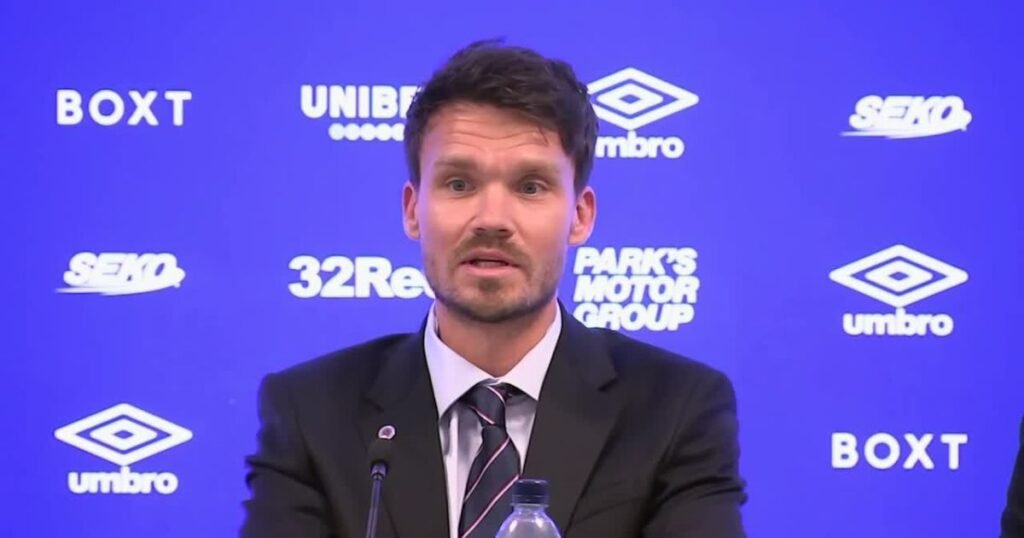
Rangers have left critics stunned as you witnessed them climb to second place in the Premiership with a comfortable 2-0 win over Aberdeen at Ibrox, thanks to first‑half strikes from Manny Fernandez and Nicolas Raskin. You’ll feel the momentum – they’re now just three points behind leaders Hearts, and the atmosphere around the club has shifted sharply in your favour. Danny Rohl has taken charge of a recovery that you might not have seen coming after he inherited a mess from Russell Martin. His record of ten wins and two draws in 13 league matches tells you everything about the turnaround. As Rohl put it: ‘I think at first it’s important to say it’s not just me personally. I have a fantastic coaching team, it’s not a one-man show, we’re doing this together with the club, with my players, with the coaches, with the staff behind the coaches. ‘We’re growing together. We are in a fantastic way, I think we surprised a lot of people since I’m here. ‘But, for me, it’s about the next game. I’m hungry, I’m ambitious, I know what it means and which effort we need until the end of the season and this is to do a lot more.’ You’ll have noticed he’s not complacent about the January window. Rangers are linked with Silas Andersen, the Danish youth international currently at BK Hacken, and Rohl was candid: ‘Yeah, we are in the process, we work on this,’ he said. ‘The last two days after the big win, the players who were on the bench, they are on the front foot. ‘They want to be part of the train at the moment and you have to be on the front foot, otherwise we leave the train station without some players, and this is tough. ‘We need the challenge, we need a strong squad. This is also important for me, when we make subs we have to be better, that we get impacts.’ Your take on the performance will be that Rohl’s side played some crisp football at times and showed a calmness you expect from promotion-chasing outfits. Rohl said: ‘They played some good football for some minutes, in some parts we had some easy ball-losing situations, but all in all, I’m very proud of the group at the moment. ‘After the game at the weekend, you never know, it’s always difficult to play three days later again, but we delivered again, and the next three points help us. ‘You should not forget, you play against a team, you never know what comes when they change the manager.’ From the other dugout, Peter Leven rued missed chances and told you his side gave a response but lacked finishing: ‘I’m disappointed to lose the goals that we lost. ‘But the boys reacted the way I wanted. The pressing was good, the intensity, the fight was there. ‘At times when we do play, we look like a good team. I thought we had enough chances to take something from the game. ‘We had clearer chances (to score goals ourselves). You need to take those opportunities. Just add a little bit of end product, a little bit of composure.’ So, if you follow Rangers, this feels like a season where belief is returning – and you’re watching a side that could mount a proper title challenge if the squad is strengthened and the form keeps coming.

Scroll to Top